The Impervious Republic of Iran
Iran didn’t build a theocracy. It built a democracy that is impenetrable to foreign interference.
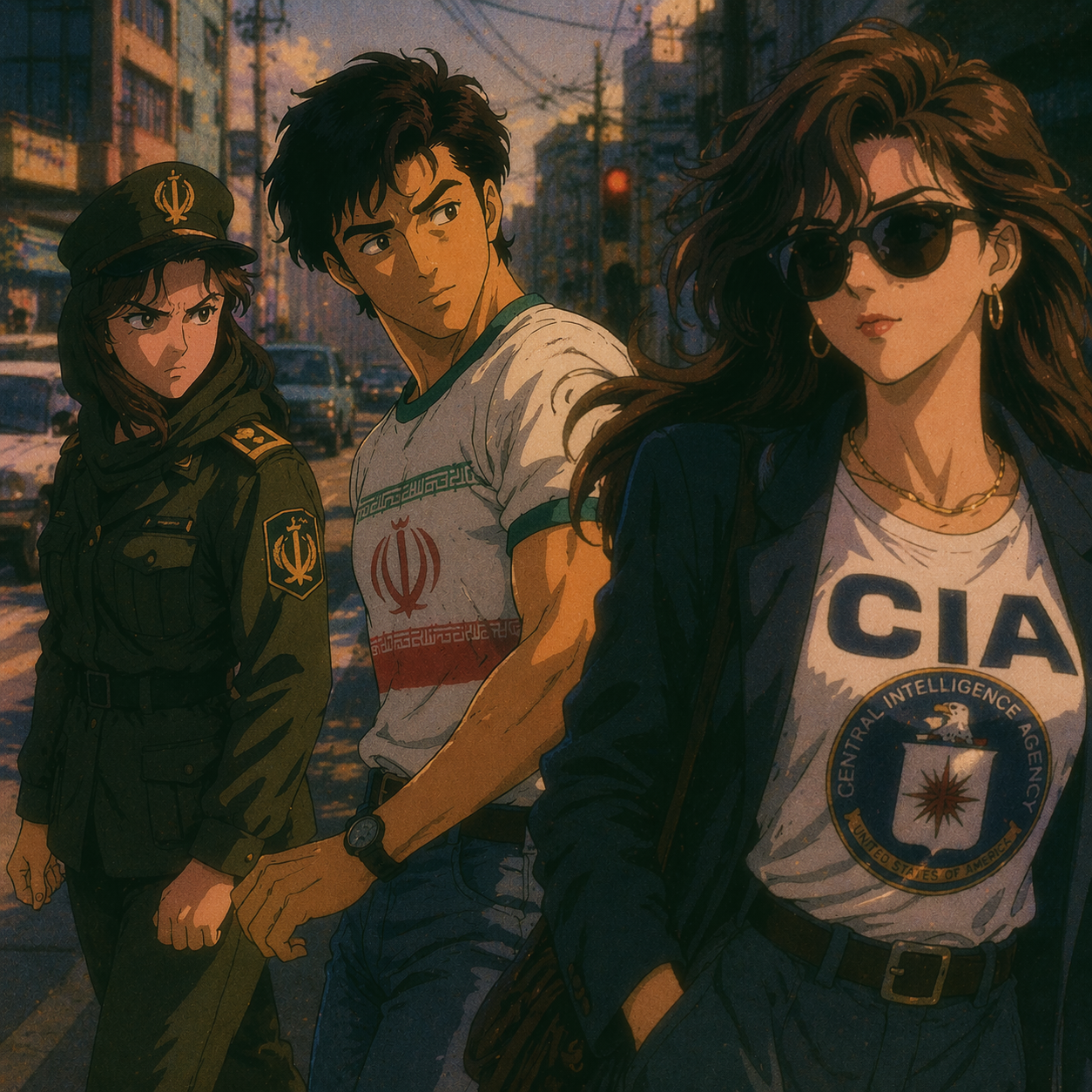
The Impervious Republic of Iran
Iran’s Islamic Republic as Anti-Coup Architecture
In August 1953, a CIA operative named Kermit Roosevelt Jr. sat in a Tehran safe house with suitcases of cash and a plan to destroy a democracy. The democracy in question belonged to Mohammad Mossadegh, the elected Prime Minister of Iran, a nationalist who had committed the unforgivable sin of nationalising his country’s oil. The British, whose Anglo-Iranian Oil Company stood to lose the most, had been agitating for his removal since 1951. The Americans, newly convinced that any postcolonial nationalist must secretly be a communist, needed little persuasion. Roosevelt’s cash bought street mobs, bribed newspaper editors, paid clerics to denounce the government, and bankrolled officers to move against it. Within a fortnight, Mossadegh was under arrest. Within a month, the Shah — compliant, pro-Western, and thoroughly tamed — was back on his Peacock Throne. Operation Ajax, the CIA’s internal codename for the whole affair, later gave the agency a new word for what it had wrought: blowback.
The founders of the Islamic Republic remembered. More than remembered — they studied. When Ayatollah Khomeini and his allies sat down to design a new Iranian state in 1979, they were not merely theologians working out the constitutional implications of Shia Islam. They were engineers, and the problem they were solving was precise: how do you build a state that cannot be bought? Twenty-six years had elapsed since Mossadegh’s fall. A generation had grown up under the Shah, whose rule rested on American arms, CIA-trained secret police, and the persistent humiliation of a sovereign nation governed by proxy. The revolution that swept him out was many things — religious awakening, nationalist uprising, left-wing insurrection, clerical coup. But the constitution it produced was, at its structural core, a document written in direct response to 1953. To read the Islamic Republic’s governmental architecture without that context is to miss the entire point of the building.
What Democracy Alone Cannot Defend
The standard liberal theory of democratic legitimacy runs something like this: a government chosen by the people reflects the people’s will, and that will is the only legitimate basis for political authority. It is a tidy theory. It survives contact with reality rather badly.
Mossadegh had been enormously popular. He had been named Time magazine’s Person of the Year in 1953 — the only Iranian ever to receive that distinction. His nationalist coalition commanded parliamentary majorities. His oil nationalisation policy had the passionate support of the Iranian street. None of it mattered. A foreign power with sufficient cash, sufficient cynicism, and a compliant military officer corps could manufacture a counter-revolution in a fortnight. Democratic legitimacy offered no protection against a foreign power willing to simulate popular opposition, purchase clerical condemnation, and bribe enough soldiers to move. You can fake a people’s uprising. Operation Ajax had proved it.
This is the analytical foundation of the Islamic Republic, and it deserves to be taken seriously rather than dismissed as clerical obscurantism. The founders faced a genuine problem in constitutional design: how do you build veto layers that money cannot buy? Elected officials, by definition, depend on processes — campaigns, media, coalitions — that money can corrupt. The solution the Assembly of Experts arrived at was to embed an authority whose legitimacy derived from a source external to the political market: religious scholarship. A grand ayatollah’s standing rests on decades of accumulated learning, on the independent judgment of other scholars, on a credibility that accretes through a peer process stretching back centuries. You can perhaps buy a politician’s vote. You cannot easily buy a scholarly reputation.
This is the functional logic of velayat-e faqih — the Guardianship of the Islamic Jurist — which sits at the apex of the Iranian constitutional order. Strip away the theological idiom and what remains is a counter-majoritarian institution designed not, as in Western constitutional thought, to protect individual rights against mob rule, but to protect national sovereignty against foreign subversion. The Supreme Leader, selected by senior clerics rather than the electorate, sits outside the electoral cycle entirely. He cannot be removed by a foreign-sponsored election result. He cannot be corrupted by a foreign-funded campaign. His constituency — the ulema, the scholarly establishment — is the one constituency in Iranian society most resistant to the particular form of penetration that destroyed Mossadegh.
The Constitution That Almost Wasn’t
The first draft told a different story.
The preliminary constitution prepared by the provisional government of Mehdi Bazargan in June 1979 bore no resemblance to what eventually emerged. It was structured after the French Fifth Republic — separation of powers, elected executive, independent parliament — and made no reference to velayat-e faqih whatsoever. The clerics were allotted a minority presence on a constitutional review council. The revolution, in its first constitutional draft, was building a secular republic.
What transformed it was Khomeini and a clerical-dominated Assembly of Experts that saw in the standard liberal model precisely the same vulnerability that had destroyed Mossadegh. Fifty-five of the seventy-two recognised delegates were clerics, nearly all of them Khomeini loyalists. They rewrote the document comprehensively. The final constitution that went to referendum in December 1979 — approved, officially, by over 99% of voters — added the office of Supreme Leader, vastly expanded the Council of Guardians, and embedded velayat-e faqih as the organising principle of the state.
Khomeini himself was not initially explicit about this agenda. In exile, he had repeatedly denied that clerics intended to rule directly. But the logic of the design was clear to those within his network, and it was a logic shaped by a very specific historical lesson. The preamble of the constitution is unusually candid about it. The collapse of the Shah’s regime, it declares, meant the destruction of “domestic tyranny and the foreign dominance that relied on it.” The new order was to be constructed so that foreign dominance would find nothing to rely on.
The Architecture, Layer by Layer
What emerged is a structure of genuine constitutional ingenuity, whatever one thinks of its consequences.
At its base sits a democratic layer that is not fictional. Iran holds regular elections — for President, for the 290-seat Majlis, for municipal councils and the Assembly of Experts itself. Turnout has historically been substantial. The results have been genuine: reformists have won, hardliners have won, the composition of government has visibly changed with electoral outcomes. Mohammad Khatami’s election to the presidency in 1997 on a platform of civil society and rule of law was not engineered; it surprised the establishment. Hassan Rouhani’s victories in 2013 and 2017 reflected genuine public preferences for engagement over confrontation. Iranian elections are contested. They are not free by liberal standards, but they are not theatre either.
Above the electoral layer sits the Guardian Council — twelve members, six senior clerics appointed by the Supreme Leader, six jurists elected by parliament. The Council has two functions. It reviews all legislation to ensure conformity with Islamic law and the constitution, operating as a kind of supreme court. And it vets all candidates for elected office, reviewing qualifications before any ballot is cast. This second function is where the anti-subversion logic operates most directly. A foreign power that funds a political movement, cultivates a client politician, or sponsors a media campaign around a sympathetic candidate will find the candidate simply disqualified before polling day. The Council does not explain its rejections in justiciable terms. The veto is opaque and absolute.
The Supreme Leader sits above both layers. His formal powers are extraordinary: he commands the armed forces, appoints the heads of the judiciary and state broadcasting, names half the Guardian Council, and can dismiss the President. He is appointed by the Assembly of Experts — 88 senior clerics elected by the public from a pre-vetted list — for an indefinite term. The Leader answers to the Assembly in theory; in practice the Assembly has never moved against a sitting Leader. What the structure achieves is a supreme authority who is embedded in a network of scholarly and clerical relationships that make him genuinely resistant to the leverage that foreign money can apply to elected officials.
The Expediency Council — another body, appointed by the Leader — arbitrates disputes between the Guardian Council and the Majlis, and advises on policy. There are also the bonyads, large religious foundations that control substantial portions of the economy outside the formal state budget, meaning that economic leverage — sanctions, investment withdrawal, asset pressure — operates against a partially detached economy rather than a fully integrated one. The architecture is redundant by design. Each single point of failure has a backup.
Running alongside the entire structure, parallel to the constitutional order, is the instrument that Khomeini created five months after the revolution’s triumph: the Islamic Revolutionary Guard Corps.
The Hardware of Sovereignty
The IRGC was established by decree in May 1979, and Khomeini’s reasoning was stated without ambiguity: Iran needed a military force whose loyalty was to the revolution, not to the state — because the state’s military, the Artesh, had been trained, equipped, and culturally shaped by the United States. The Shah’s army was a captured institution. Khomeini could not trust it, and history had given him every reason not to: it was the Shah’s military that had moved against Mossadegh in August 1953, providing the operational muscle for what CIA money had organised.
The solution was a second military. Where the Artesh defends Iran’s territorial integrity in the conventional sense, the IRGC’s constitutional mandate is to guard the revolution itself — against foreign interference, against a coup by the traditional military, and against internal movements deemed to threaten the revolution’s legacy. The IRGC answers not to elected civilian ministers but directly to the Supreme Leader. It is, structurally, a military immune to the chain of command through which a foreign power could redirect conventional armed forces.
In the early years, this meant the IRGC served as a counterweight to the Artesh, watching it, paralleling it, ensuring that no US-backed officer could repeat what General Fazlollah Zahedi had done in 1953. The Iran-Iraq War transformed it into something far larger. Eight years of brutal conventional and unconventional fighting — Saddam Hussein’s invasion backed, it should be noted, by most Western powers including the United States — forged the IRGC into a full-scale military institution with its own army, navy, aerospace force, and intelligence arm. The Quds Force, its expeditionary unit, became the instrument through which Iran projects influence across the region without direct state-to-state confrontation: Hezbollah in Lebanon, militia networks in Iraq, support for the Houthis in Yemen. All of it, in Iranian strategic logic, is forward defence — keeping the confrontation as far from Tehran as possible.
The IRGC has also, over decades, accumulated economic power that reinforces its institutional independence. It controls major construction conglomerates, energy interests, telecommunications companies, and import-export networks that operate partly outside the formal economy. US-led sanctions, intended to bring the system to its knees, have in practice expanded the IRGC’s black-market infrastructure and increased its domestic economic dominance. An institution with its own revenue streams, its own military capacity, and its own ideological mandate is very difficult to externally leverage. This, too, is the point.
The Costs of Immunity
An essay of this kind earns its credibility only by confronting what it cannot explain away.
The most serious objection is not that the analysis is wrong but that it is incomplete. The same institutional apparatus that resists foreign subversion crushes domestic dissent with equal efficiency. The Guardian Council that can exclude a foreign-sponsored candidate can also exclude a genuine reformist, a women’s rights advocate, a religious minority, a critic of clerical governance. The IRGC that was designed to prevent another 1953 is the same IRGC that suppressed the Green Movement in 2009 and has violently cracked down on protesters again and again since. The walls that keep foreign hands out also keep Iranian voices in. One cannot celebrate the architecture without reckoning with its costs, and those costs are paid entirely by Iranians.
The second objection concerns intent versus outcome. Khomeini’s design served two masters simultaneously: the anti-imperialist logic of post-1953 Iranian nationalism, and his own doctrine of clerical supremacy. These happened to require the same institutional answer. It is not obvious that the anti-imperialist logic was primary. One might equally argue that velayat-e faqih was the goal, and the anti-imperialist framing was the justification. The coincidence of theological ambition and nationalist paranoia is too convenient to pass unremarked.
The third objection is about what the Islamic Republic has itself become. A government designed to resist foreign domination has, in practice, become deeply dependent on specific external relationships — with China, with Russia, with regional proxies — that shape its conduct in ways its own citizens have not chosen. The independence it maintains from Western powers is real; whether it amounts to genuine sovereignty for the Iranian people is another question.
These are not decorative objections. They are the load-bearing contradictions of the system. The essay that ignores them is advocacy; the essay that engages them is argument.
Why the Architecture Threatens the Regional Order
The Israeli government’s stated preoccupation with Iranian nuclear capability has always been somewhat beside the point. A nuclear Iran would be deterrable by the same logic that deterred the Soviet Union; Israeli strategists know this. What cannot be deterred — and what cannot be dismantled by the conventional toolkit — is an Iran that simply refuses to be dismantled.
For decades, the regional order underwritten by American power has rested on a consistent operating assumption: that any state capable of projecting independent power could be brought to heel through some combination of economic pressure, intelligence penetration, and domestic subversion. The Iraqi state was destroyed by invasion. The Syrian state was bled through a proxy war its Western and Gulf-state opponents expected to finish it. Lebanon’s governmental coherence has been systematically undermined for a generation. The pattern is not conspiratorial — it is simply what great powers do to regional rivals when the cost of direct confrontation is too high.
Iran is the exception that breaks the pattern, and that is what makes it intolerable to those invested in the pattern’s continuation. Its anti-coup architecture — the very design this essay has traced back to 1953 — renders it resistant to the standard mechanisms of regime change. It cannot be sanctioned into collapse; the IRGC’s parallel economy absorbs the blow. It cannot be subverted from within; the Guardian Council and the Supreme Leader sit outside the reach of foreign-funded opposition. It cannot be destabilised by proxy; it runs proxies itself, and has been doing so for forty years. A nuclear weapon would make Iran dangerous. Its existing architecture makes Iran permanent. For the architects of regional order, the second problem is considerably more serious than the first.
Whether It Worked
Set the moral questions aside for a moment — which one must eventually do in any serious analysis of institutional design — and ask the simpler empirical question: did the architecture perform its stated function?
The answer is yes, and the margin is not close.
The Islamic Republic has survived for nearly half a century against sustained external pressure from the world’s most powerful states. It has endured comprehensive economic sanctions, covert sabotage of its nuclear programme, the assassination of its scientists and military commanders, proxy wars on multiple borders, and repeated attempts at internal destabilisation. No equivalent revolutionary government in the modern Middle East has shown comparable durability under comparable pressure. The Shah fell; Saddam fell; Gaddafi fell; Assad’s government collapsed the moment Russian support wavered. The Islamic Republic has not fallen. It has been battered, economically crippled, internationally isolated, and despised by large portions of its own population — and it has not fallen.
This is not evidence of virtue. It is evidence of design. A structure built specifically to resist the mechanisms by which foreign powers typically destabilise states has proven — at the purely functional level — resistant to those mechanisms. That the same structure also resists the mechanisms by which citizens might peacefully reform it is the tragedy encoded in the original solution.
The current, overt state of war between Israel and Iran in 2026 is, in its own grim way, the ultimate testament to the system working; because the Republic proved impervious to the subtle, corrosive tools of the 1953 playbook, its enemies have been left with no choice but to engage in direct, high-cost conventional conflict to attempt what they could not achieve through the patient, quiet mechanics of infiltration.
Conclusion: The Price of Immunity
There is a terrible clarity to what Khomeini’s architects built. They looked at 1953 and asked: what would have saved Mossadegh? Not popular support — he had that. Not democratic legitimacy — he had that too. What he lacked was an institutional layer impervious to the specific tools of foreign subversion: the purchased mob, the bribed editor, the bought officer, the client general. So they built that layer, and made it theological, because theological authority was the one form of legitimacy in Iranian society that neither CIA money nor British manipulation had successfully penetrated.
The resulting system is not a democracy. It is not fully a theocracy either, in the sense of government by divine law administered by priests. It is something more specific and more interesting: a democracy encased in armour, designed to remain sovereign even when the democracy within is expressing inconvenient preferences. The armour is real. The democracy is real. The tension between them is the defining fact of Iranian political life.
Western commentary typically addresses the Islamic Republic as an irrational system — the product of religious fanaticism, anti-modern sentiment, or simple authoritarianism. This is comfortable but inadequate. The system is the product of a rational response to a real historical injury, designed by people who understood exactly what had happened to them and were determined that it would not happen again. That their solution created a new form of unfreedom for the people it was ostensibly protecting does not make the original analysis wrong. It makes the Islamic Republic one of history’s more instructive examples of a problem correctly diagnosed and prescribed for, even if the medicine has come with significant side effects.
Today, Israel and its allies in the Whitehouse cannot tolerate the Islamic Republic, not because it is ‘fanatical,’ but because it is finally standing on ground that cannot be moved. By successfully engineering a state that is structurally immune to the bought politician, the compromised military, and the orchestrated color revolution, Iran has established a form of sovereignty that the current globalist order is architecturally incapable of subverting.